

Biological Sciences
Research in the biological sciences platform encompasses fundamental, translational, and clinical science. Our scientists and trainees use a range of experimental approaches and techniques to understand the mechanisms of healthy and diseased physiology to understand the functions and interconnections of molecules, cells, organs and systems.
Key areas of investigation include cancer, diabetes, dementia, immunology, infectious disease, neuroscience and sensory neurobiology. Our researchers tackle these fields while training a diverse new generation of interdisciplinary scientists with the goal of improving diagnosis and prognosis; and make treatment more specific, selective and personalized, thus more effective and safer.
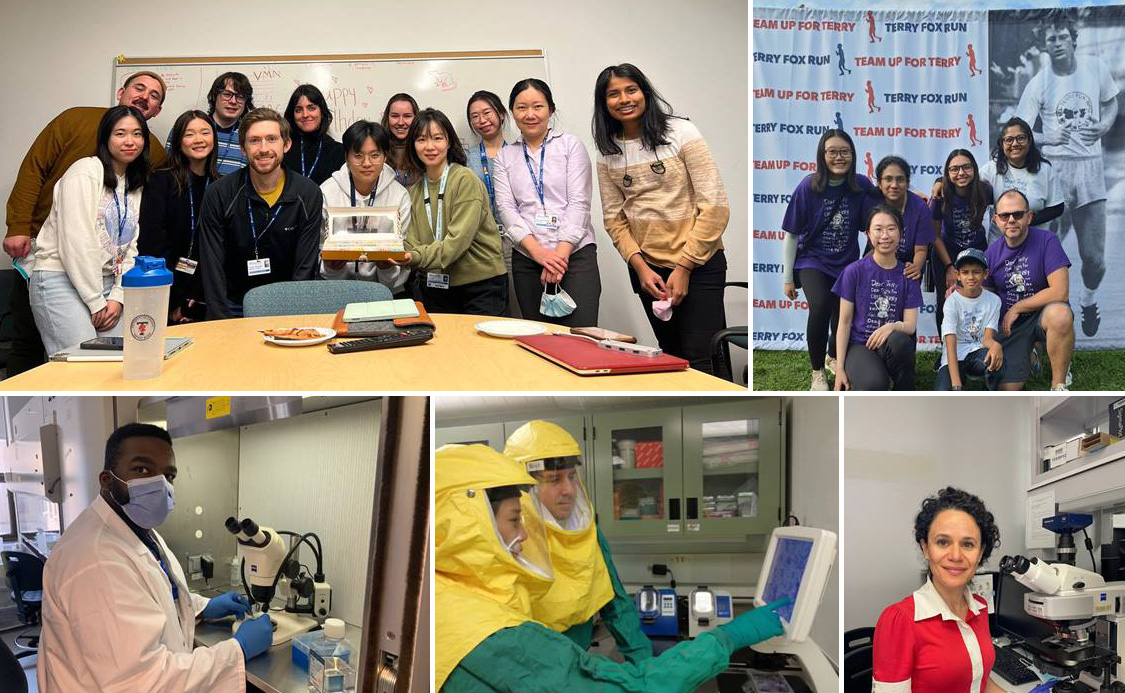
Research in Biological Sciences
Dr. Iacovos Michael
Dr. Iacovos Michael’s group investigates the mechanisms involved in cancer progression and resistance to therapy. The group uses multidisciplinary approaches, ranging from transgenic mouse models to human preclinical models, and from single-cell omics to cell electrophysiology. The team works closely with clinicians to translate the knowledge gained at the bench back to the bedside, enabling personalized treatment.
Dr. Samira Mubareka
Dr. Mubareka’s group studies how viral infectious diseases are transmitted from animals to humans, to anticipate future public health threats. Their work spans different settings including the field, high biocontainment, and the bedside. The group collaborates with wildlife biologists, ecologists, immunologists, computational biologists and genomic and clinical epidemiologists, intersecting at the juncture of public health and academic research.
Dr. Stephan Ong Tone
Fuchs endothelial corneal dystrophy (FECD) is a common degeneration of the corneal endothelium that if left untreated can lead to blindness with no pharmacological therapies. Dr. Ong Tone’s group is characterizing corneal endothelial cell migration in healthy and FECD corneas as well as the regenerative heterogeneity of corneal endothelial cells. The work aims to develop therapeutic strategies to alleviate FECD pathogenesis and promote regeneration.
Dr. Chao Wang
Ever wondered how the immune system can change the way we stress? The Wang lab studies how immune cells interact with neurons and glial cells of the hypothalamus and promote function and regeneration. Leveraging genomic, epigenomic, and cell biology approaches, the group interrogates how such interactions alter autoimmunity and depression.
Director
Dr. JoAnne McLaurin
view profile
Contact
Charmi Shah
Platform Manager, Biological Sciences
charmi.shah@sri.utoronto.ca

